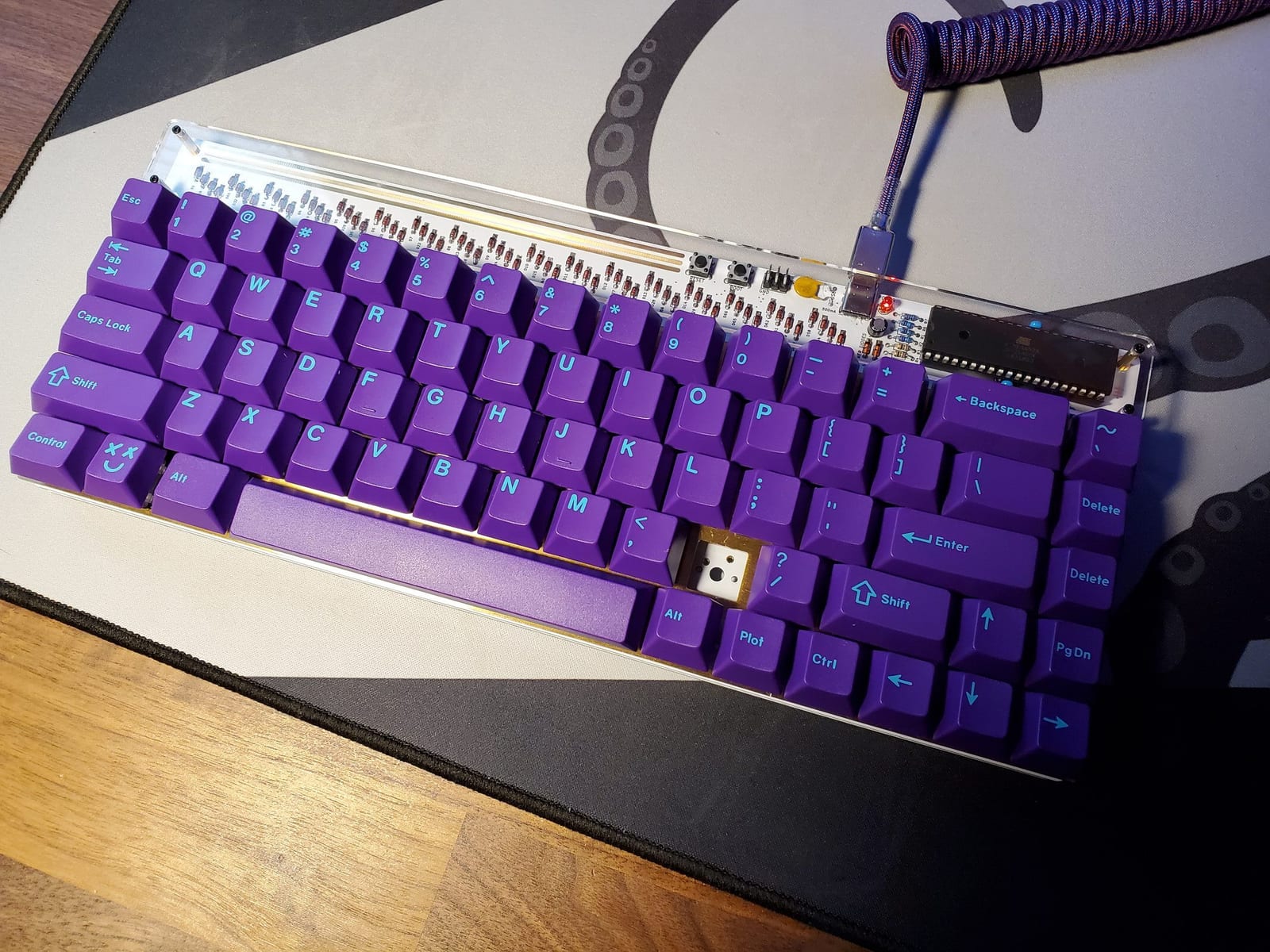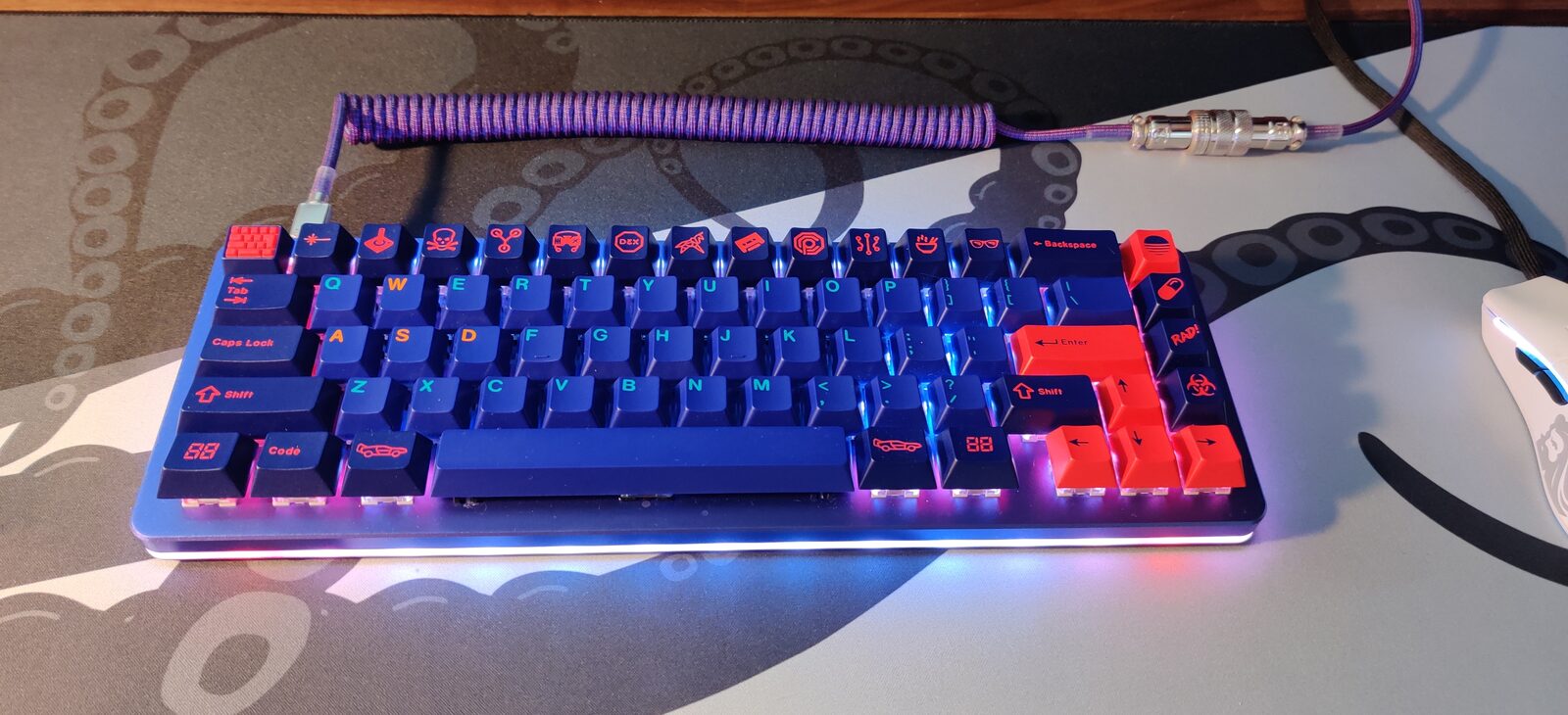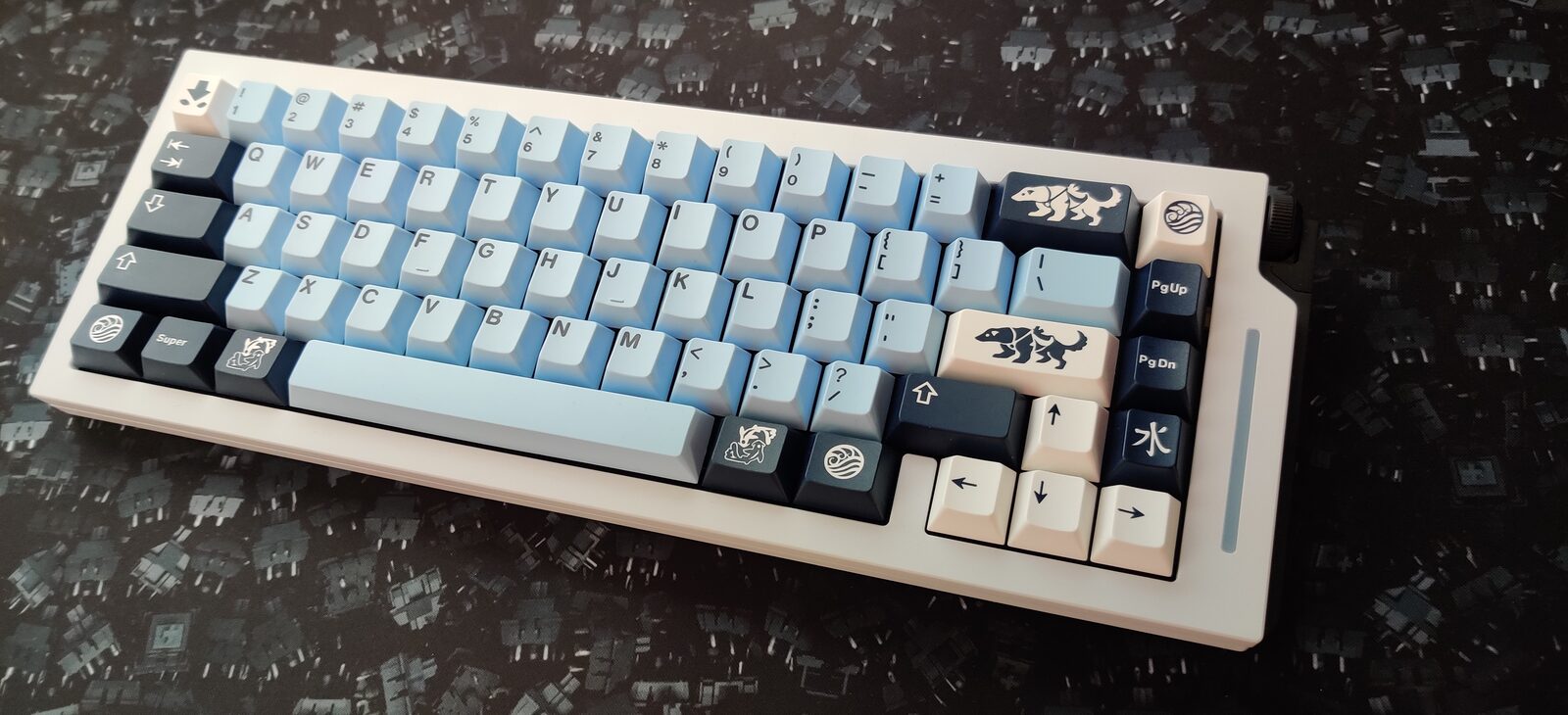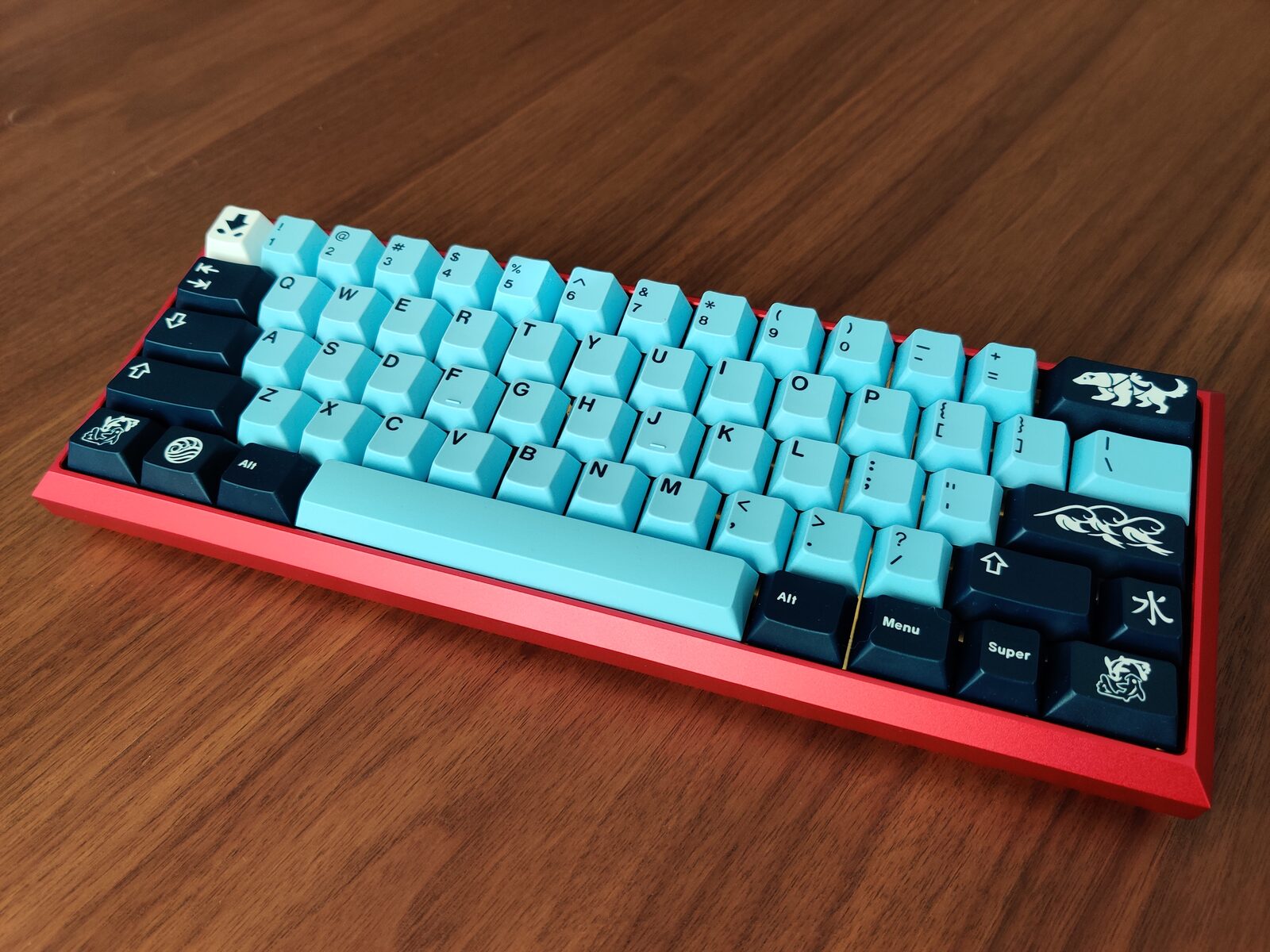
Mechanical keyboards started as wanting one nice thing to type on and turned into a small collection built around a single question: what actually changes the way a board feels and sounds. Five builds in, I’ve mostly answered it, and the answer is that it’s almost never the thing people obsess over. It’s the mount and the case doing the quiet work underneath.
That’s the through-line across everything I’ve built. The Mekanisk Fjell is the anchor, a 60% in that high-profile Norwegian style, thick chamfered aluminum with a brass weight cut into a mountain range on the underside (Fjell means mountain, a detail you never see again once it’s on the desk). It’s tray mounted, which people talk about now like a character flaw, but there’s something honest about it. No flex, no bounce, the board just sits there and refuses to move, and what that does is flatten everything into one voice. You stop hearing individual switches and start hearing the board itself. Still one of my favorites to type on.
The two Owlab Voice65s are the opposite religion. 65%, gasket mounted with a leaf-spring plate, so there’s real give when you press a key, a softness the Fjell will never have. Aluminum case, brass weight, and that signature right edge with the LED strip and the knob poking out. Running two of them sounds like overkill until you’re mid-tune on something and realize it’s the fastest A/B rig you could ask for. Same board, same layout, change one variable, feel it back to back instead of trusting your memory of what last week felt like.
The other two round out the range. The KBD75v2 is the workhorse, a 75% that keeps a function row and arrows without committing to a full TKL footprint, aluminum case with the acrylic strip around the base for the underglow. Tray mount like the Fjell, but it feels nothing alike because the whole geometry underneath is different. And the Holy60 is the featherweight, a case that’s something like 220 grams of aluminum, basically a skeleton that’ll swallow just about any 60% PCB you hand it. After picking up the Fjell, it feels like it’s made of paper. It’s the most parts-bin board in the set in the best possible way, the case getting out of the way and letting whatever’s inside define the personality.
Switches are where I stopped experimenting for its own sake. I run Gazzew Boba U4Ts almost everywhere, that rounded tactile bump with the deeper muted pop, and I’ve been on them long enough that it’s just settled taste at this point. Keeping the switch consistent is deliberate. It means the differences I feel board to board are coming from the mount and the case and nothing else, which is the whole reason the collection is interesting to me instead of just being five keyboards.
The one piece of gear that isn’t a keyboard is the grid, a polycarbonate slab holding a few hundred keycaps. That’s the audition bench. Anytime I’m curious how a profile or a texture or a particular set sounds on a given board, it comes off the grid and goes on for a test before it ever gets committed to a build. Same instinct as running two Voice65s. Isolate the variable and feel it directly, instead of trusting what you remember about last week.